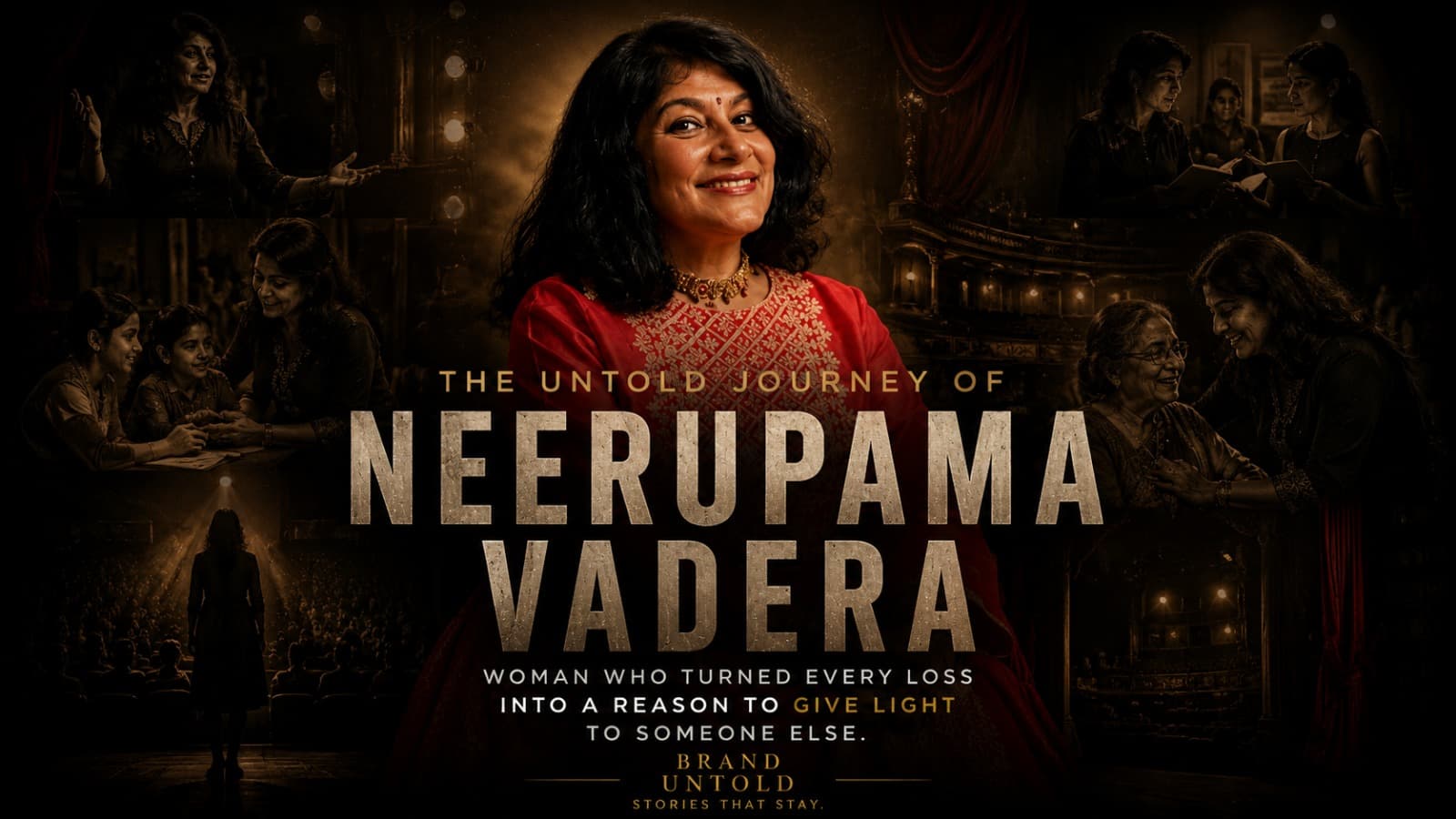
There is a kind of person who lives this line — not as a philosophy, but as a daily practice. Neerupama Vadera is that kind of person. .
Neerupama Vadera is that kind of person. And her story — the real one, not the version that fits neatly into a credits list — is less about what she has built and more about what she chose to do with what was taken from her.
On paper, she is an entrepreneur, a theatre practitioner, an actor, a dancer, a director, a writer, and a caregiver. She has appeared in Hansal Mehta's Chhalang alongside Rajkumar Rao and Nusrat Barucha, done commercials for VI and Shark Tank, worked across web series like Aspirants 3 and NCR Days with The Viral Fever, and recently completed a docufiction with Sharib Hashmi under the direction of Shri Sanjeev Jha. She runs ICANDOIT Theatre Group, an organisation that has completed close to 250 projects with hospitals, NGOs, government bodies, and some of the most vulnerable communities in the country — juvenile offenders, cancer patients, abandoned women, children in depression.
None of that is the story.
The story is what happened in between — and why someone with every reason to fold inward kept turning outward instead.
The First Job, and the Years That Followed
Neerupama got her first job at sixteen. English-speaking skills, a multinational company, and parents who — unusually for the time — gave her the room to explore. For two and a half years, that job gave her something she would lean on for the rest of her life: a foundation.
Then her parents' business collapsed completely.
What followed were the hardest years of her life — eighteen to thirty. She moved to Delhi, took up work in international freight forwarding, in the same field, taaki parents se paisa na lena pare — so she wouldn't have to take money from her parents. Eventually, she and her husband started their own organisation.
Her marriage itself was a quiet act of courage — an intercaste marriage into a family in Bihar. To prove the decision was right, she says, she took full responsibility for both families, and for the business. Life became a loop: office to home, home to office. Somewhere in that loop, she lost herself.
Bachpan me jo chulbula pan tha, enjoy karne ka jazba tha, nae nae experience karne ka junoon tha — sab bhool gayi thi.
The mischievous spirit of childhood, the eagerness to enjoy, the hunger for new experiences — all of it, forgotten.
Her Sister, and the Particular Grammar of That Loss
At thirty-six, Neerupama lost her sister to kidney failure. Her mother had donated a kidney years earlier; her sister survived five more years before she passed.
Ask Neerupama what she remembers most about her sister, and she doesn't talk about the death. She talks about the laughter.
"Whenever we were together, we used to laugh without any reason. Cracked jokes, did stupid things, got fully mad, did things having no sense. No one was there to judge us."
Her sister had a particular phrase she used on the people closest to her — a scolding delivered with love, the way only someone who truly knows you can scold:
"Chutney bana dungi teri."
I'll make chutney of you.
She was gone at thirty-six. Neerupama still misses her partner in masti.
This is what grief actually looks like when you let it be specific. Not the absence of a person — the absence of the one person who made you laugh without reason, who threatened to make chutney of you, who never judged. That particular shape of emptiness.
Life was just happening to me, but I was not happy from within. There was some kind of unfulfilment deeply rooted at the corner of mind and heart.
She didn't stop working. She kept showing up. But something had shifted, quietly, underneath everything.
₹30,000, Borrowed From a Friend
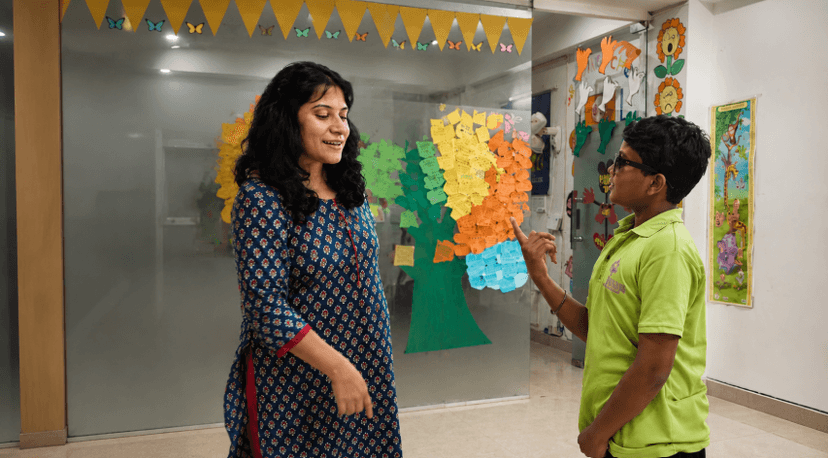
Some years later, Neerupama opened her own company with thirty thousand rupees borrowed from a friend.
She had married by then a man she describes simply as someone who accepted all her pain and worries as his own. Together, with experience but without capital, they started an international company from almost nothing.
Around the same time, two things entered her life that would quietly reshape everything that came after.
Being Punjabi, she started observing Chhath — a festival not part of her own cultural tradition, but one she felt drawn to. And she began practising Nichiren Buddhism, chanting Nam-myoho-renge-kyo.
Buddhism Practice karni shuru ki. Nam myo ho renge kyo chant karne se bahut kuch badla life me.
She describes encountering this philosophy as life-changing — not because it offered escape, but because it gave her an inner call to develop herself to a point where she could contribute to building a better world. She found herself praying not for things to get easier, but for the ability to give back through whatever talent she had.
She found inspiration in Sabra Williams, a Buddhist practitioner and actor in the United States who works with juvenile offenders through theatre. And she found a guiding line from her mentor, Dr. Daisaku Ikeda — a line that would, in many ways, become the spine of everything she built afterward:
"When you light a lantern for others, your own life brightens up."
The Moment She Understood What Theatre Could Do
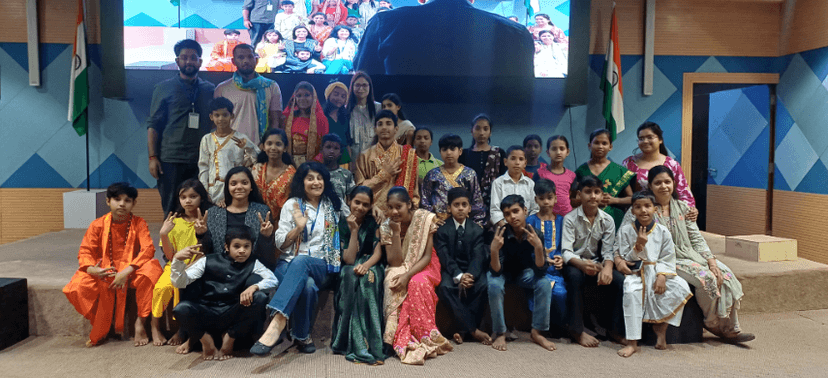
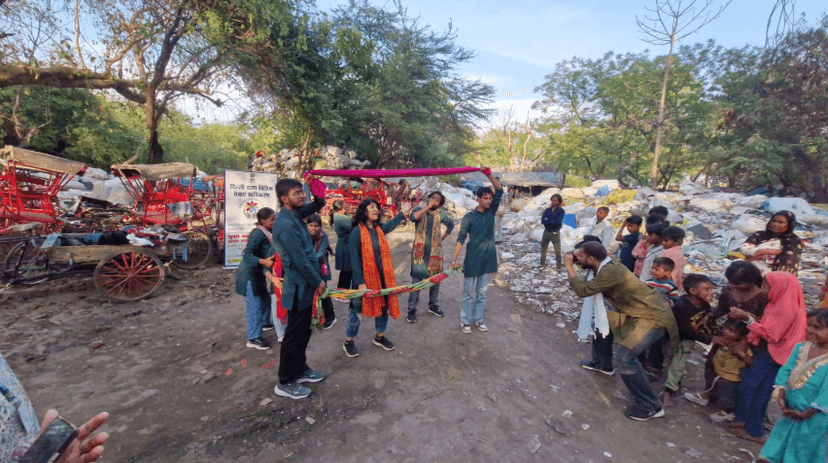
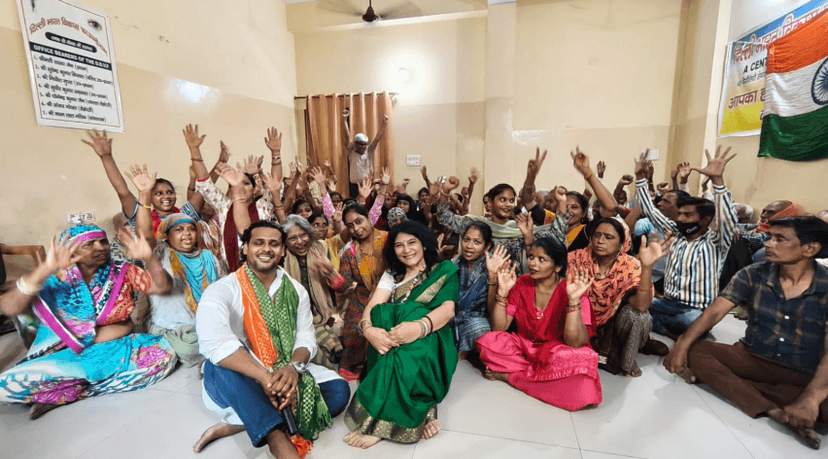
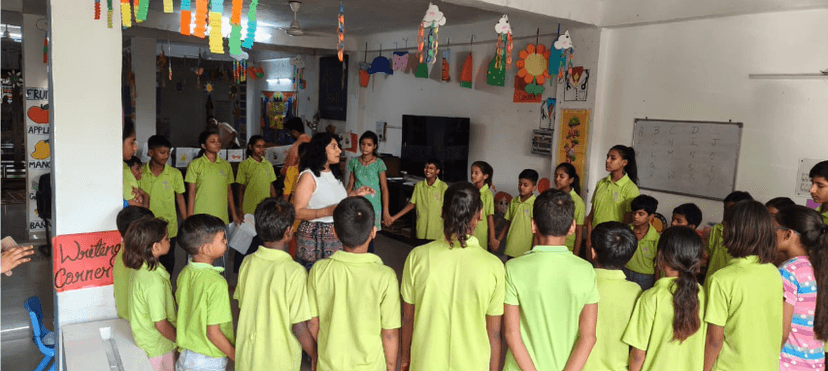
She learned theatre, got trained, and started ICANDOIT Theatre Group.
Her first government project was working with juvenile boys — young people who had committed crimes ranging from theft and drug addiction to murder and rape. Before their workshop began, the group was asked to perform a play for the boys first.
What happened in that room is the moment Neerupama points to when asked when she knew this was how she wanted to give back.
"We performed, and the juveniles got emotional. They had tears in their eyes. Upon asking for feedback, they expressed that they felt themselves in the play we had performed. They recalled their life's treasured and beautiful moments that they have lost now. They remembered their families, good times spent with them — but now they are in another phase of life, away from their loved ones."
She understood something in that room that she has never unfelt since. Theatre was not entertainment. It was not even education. It was the specific process by which a person could be shown their own life, at a safe distance, and find inside themselves something they thought they had lost.
"I understood that this is the most beautiful, empathetic, impactful yet powerful process of inner transformation in anyone. After having this wisdom, I never looked back."
She describes her own experience of theatre similarly — comparing it to the story of Hanuman, who had forgotten his own powers until someone reminded him of what he was capable of.
"When my play Sky is the Limit had its first show in Alwar — I got that feedback. Same goes with me. Theatre acting was the process through which I recalled my forgotten strength."
What She Did at AIIMS Delhi
Of all the nearly 250 projects she has run — juvenile offenders, cancer survivors, women in depression, abandoned girls, underprivileged children — Neerupama says two were the hardest.
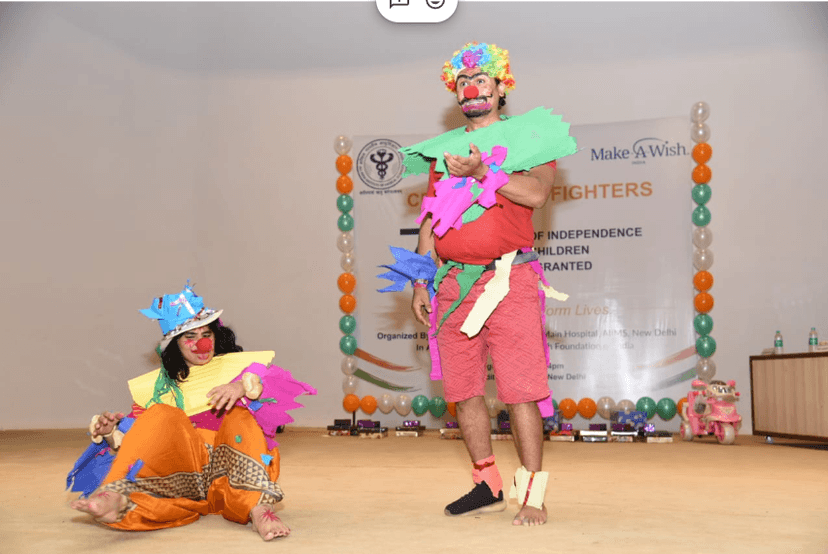
The first was being invited to AIIMS Delhi to perform for sixty-five children facing life-threatening diseases. These were children whose last wishes for gifts had been taken into consideration.
She had to decide what she could actually give them.
She decided to become a clown of happiness.
The message she chose for that room:
"To be joyful in the moment is the key and this is the only thing in our hand — har moment ko aise jeena hai, as if there is no tomorrow."
And then, for those children specifically:
"Jaise ki nanhi cheeti apna sangharsh apne vishwas pe karti hai, apne sharir ke size ke basis pe nahi."
Like a tiny ant carries its struggle on its faith — not on the size of its body.
In the same period, she was given the task of teaching dance to cancer patients between the ages of ten and sixteen. One of the girls had stage four cancer. She was, Neerupama says, "so enthusiastic, full of energy, and didn't want to give up on life."
"Meeting these precious lives gave me a path to have more gratitude instead of having complaints and grudges. I felt proud that God had chosen me for such a mission."
She could not afford to succumb to fear in those rooms. She understood this clearly — not as a performance of courage, but as a responsibility. The people in front of her needed someone to believe in their potential. Her own fear had no place in that equation.
"Being an actor, my mission is to fill life in front of me with the utmost joy of life, irrespective of any circumstances. I cannot afford to succumb to fear. I need to make others believe in themselves."
A Live Musician Before Every Chemo
In 2024, Neerupama's husband Rajiv was diagnosed with stage three colon cancer. Twelve chemotherapy sessions were prescribed.
They did not manage this. They did not endure it. They met it — together, and with the practice that had carried her for years.
They accepted that the cancer was in his body. The only option was to deal with it and face it. And so they chose, deliberately, the path of celebration — laughter, music, dance, treating it as part of life rather than the end of it.
Before every chemotherapy session, they invited a musician — a live singer — so that they could arrive at the hospital with fresh energy.
The intention was simple: "Chemo ko itna seriously na lein."
Don't take the Chemo so seriously.
Max Hospital, Saket, made a short film about them — about the courage in how they faced this, and how they accepted it without losing themselves to it.
The same year, Rajiv's sister was diagnosed with an advanced and rare disease — Motor Neuron Disease. Her body deteriorated, piece by piece, until she passed away in November 2024.
It was her death, Neerupama says, that finally triggered her to write her own story.
"It triggered me from inside out — to do whatever I want to do, so I don't regret later."
Sky is the Limit
She had wanted to write her own life for a long time and hadn't believed she could.
In the year that took the most from her, she finally did.
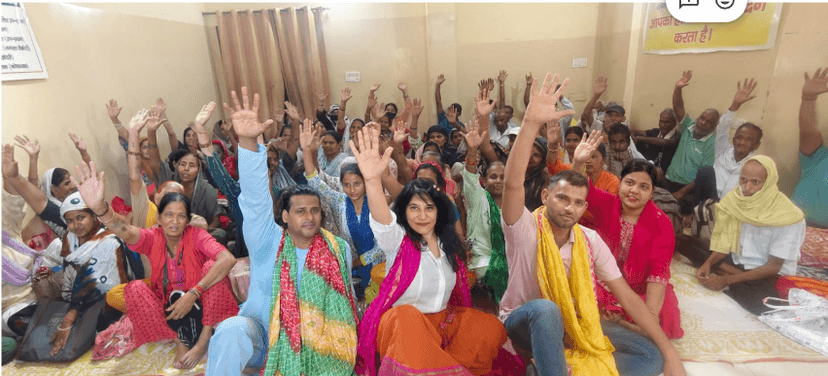
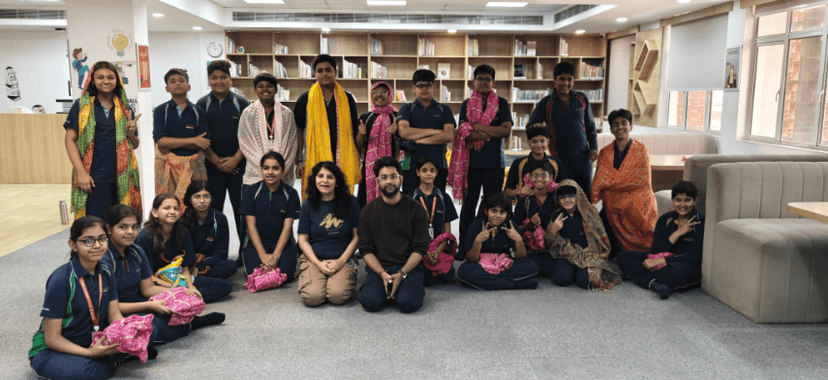
She called it Sky is the Limit — words her father used to encourage her with. The play — a musical — was performed across three different platforms. On its very first stage performance, it won seven awards.
Her husband was in the audience.
There is something almost unbearable about the timing. The same year that held a stage three cancer diagnosis, a musician invited to every chemo session, a sister-in-law dying slowly of Motor Neuron Disease — that same year, Neerupama finally found the words for everything that had already happened to her, and turned it into something that moved an audience enough to win, immediately, seven times over.
What She Carries That Has Never Been Said
Alongside the writing of this piece, we asked Neerupama if there was anything she had never said out loud — something she had been carrying that hadn't found its way into any project, any play, any post.
Her answer was the most honest thing in this entire conversation.
"Jaise mujhe apne baare mein bahut kuch nahi pata tha — like, I developed as an actor, director, writer, theatre practitioner. Har insaan ke andar do log hote hain: ek jo sab dekhte hain, ek jo ham khud se aur doosron se hide karte hain."
Every person has two selves — one that the world sees, and one that we hide, even from ourselves.
"Mujhe apna vo peak point, apni vo uniqueness dekhni hai jo main express karne se darti hoon."
She wants to find her peak. Her uniqueness. The thing she is afraid to express.
"I want to explore MY TRUE SELF."
After 250 projects. After cancer wards and juvenile observation homes and seven awards. After writing her life into a musical and performing it for audiences who wept. After all of this —
She is still searching.
"Khud ke baare mein jaan pa rahi hoon thru this art."
Through this art, she is getting to know herself.
"I want to rediscover my truest, my purest form."

What She Built for Others Along the Way
Throughout all of this, Neerupama kept finding specific, deliberate ways to make space for other people.
She paid all proceeds from three runs of Oscar Wilde's The Importance of Being Earnest — every rupee collected on BookMyShow — toward the treatment of an eight-year-old child with cancer.
She created a part-time job module within her own shipping company — five hours a day, specifically for theatre actors — so they could earn an income, continue their passion, and hold their dignity within their families.
ICANDOIT pays its theatre actors, because she believes that people who contribute to value-creating work deserve to live with dignity and be valued in return.
One of the underprivileged girls who learned theatre through ICANDOIT — who is ten years old — was selected for a Netflix web series by Sudip Sharma, the director behind Paatal Lok and Udta Punjab.
And one juvenile offender, trained in her very first government project, was later offered a stipend on her team. Today, she says, he lives a life of respect and dignity.
What She Knows Now
Neerupama describes herself today as an improved, transformed version — a better human being, still becoming.
Apne pe garv mahsoos hota hai, jab peeche mudkar dekhti hoon — ki jo jo hua meri life mein, ishwar mujhe taiyaar kar raha tha ek achhe maqsad ke liye.
When I look back at everything that happened in my life, I feel proud — because God was preparing me for a good purpose.
She has lived both of her mentor's words fully:
"When I change, my environment will change."
"When you light a lantern for others, your own life brightens up."
To shuruaat hamein khud se karni padegi, agar kuch bhi badalna hai — if anything is going to change, the beginning has to come from within.
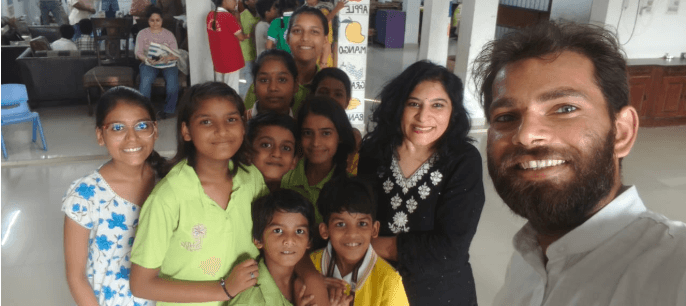
She has worked with people who had lost their way, who had given up hope. And through theatre and dance, she has tried to give them a little courage back. A little hope.
Is zindagi ko jeena hai to achhe se jeena hai, ro kar nahi — aur na hi khud ko kisi se kam samajhna hai.
If this life is to be lived, it should be lived well — not in tears, and never by thinking less of yourself.
And still — through all of it — she is searching for the part of herself she hasn't yet dared to show.
That, perhaps, is the most Brand Untold thing about her.
The story isn't finished.
A Note from Brand Untold
Some stories are told. Some stories are understood.
This one is still being lived — and that is precisely why it matters.
Neerupama Vadera has spent decades lighting lanterns for people who needed them: juvenile offenders finding their humanity through theatre, children with cancer learning to be joyful in the moment, caregivers finding language for their own exhaustion. She has carried her sister's laughter and her husband's courage and her mentor's philosophy into rooms that most people never enter.

And somewhere underneath all of it, she is still asking the same question that every honest person eventually asks:
Who am I, when no one needs me to be anything for them?
We don't know yet. Neither does she.
But we're paying attention.
The lantern she lit for others — it is still burning.